Creative Direction · UX/UI Design · Group Project
Creative Direction · UX/UI Design · Group Project
Creative Direction · UX/UI Design · Group Project
Physical conventions are limited by location, cost, and capacity.
Geekstravaganza 2025 reimagines that experience as a fully virtual convention, where fans, creators, and brands connect inside an immersive digital multiverse. Instead of navigating a schedule, users explore worlds, each designed around a different part of fandom, from cosplay to marketplace to live panels.
Physical conventions are limited by location, cost, and capacity.
Geekstravaganza 2025 reimagines that experience as a fully virtual convention, where fans, creators, and brands connect inside an immersive digital multiverse. Instead of navigating a schedule, users explore worlds, each designed around a different part of fandom, from cosplay to marketplace to live panels.
Physical conventions are limited by location, cost, and capacity.
Geekstravaganza 2025 reimagines that experience as a fully virtual convention, where fans, creators, and brands connect inside an immersive digital multiverse. Instead of navigating a schedule, users explore worlds, each designed around a different part of fandom, from cosplay to marketplace to live panels.
Overview
Overview
Overview
Geekstravaganza 2025 is a fully virtual convention designed to remove the physical limits of traditional events. Instead of a single platform, the experience is structured as a multiverse, where each section functions as its own interactive environment.
The 2025 theme, Retro Reloaded: Tomorrow Starts Today, blends nostalgia with forward-looking experiences, balancing familiarity with innovation.
Geekstravaganza 2025 is a fully virtual convention designed to remove the physical limits of traditional events. Instead of a single platform, the experience is structured as a multiverse, where each section functions as its own interactive environment.
The 2025 theme, Retro Reloaded: Tomorrow Starts Today, blends nostalgia with forward-looking experiences, balancing familiarity with innovation.
Geekstravaganza 2025 is a fully virtual convention designed to remove the physical limits of traditional events. Instead of a single platform, the experience is structured as a multiverse, where each section functions as its own interactive environment.
The 2025 theme, Retro Reloaded: Tomorrow Starts Today, blends nostalgia with forward-looking experiences, balancing familiarity with innovation.
Timeline
Timeline
Aug 2025 — Dec 2025
Aug 2025 — Dec 2025
Aug 2025 — Dec 2025
Team
Team
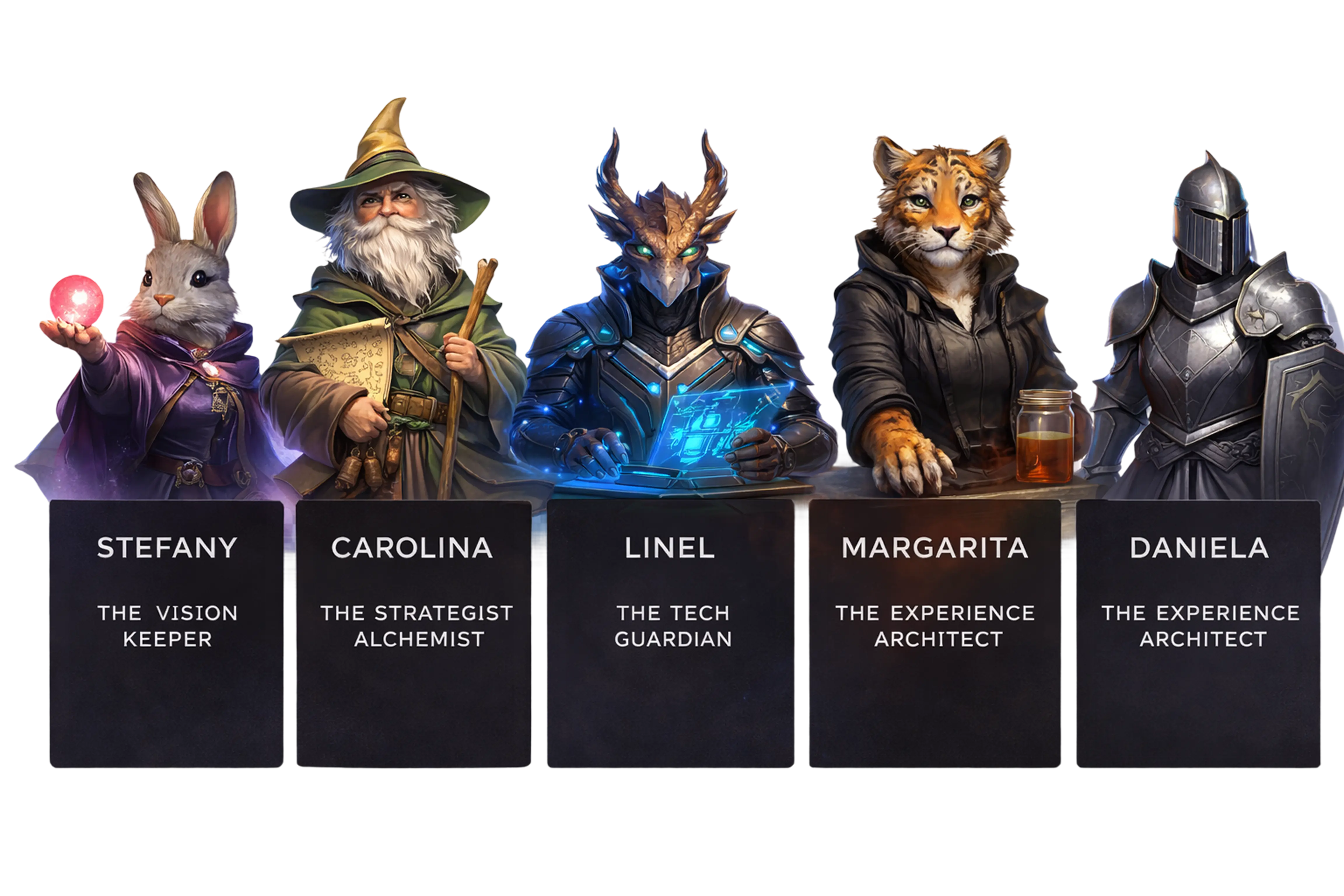
Stefany Harada — Creative Director
Stefany Harada — Creative Director
Stefany Harada — Creative Director
Carolina Angel — Art Director
Carolina Angel — Art Director
Carolina Angel — Art Director
Linel Almonte — UX/UI Designer
Linel Almonte — UX/UI Designer
Linel Almonte — UX/UI Designer
Margarita Ivshina — UX/UI Designer
Margarita Ivshina — UX/UI Designer
Margarita Ivshina — UX/UI Designer
Daniela Romero — Visual Designer
Daniela Romero — Visual Designer
Daniela Romero — Visual Designer
Tools
Tools
Figma · FigJam · Google Sheets
Figma · FigJam · Google Sheets
Figma · FigJam · Google Sheets
Skills
Skills
UX Strategy · Interaction Design · Visual Design · Team Leadership · Collaboration
UX Strategy · Interaction Design · Visual Design · Team Leadership · Collaboration
UX Strategy · Interaction Design · Visual Design · Team Leadership · Collaboration
My Role
My Role
My Role
I led the creative direction and product design for Geekstravaganza 2025, defining the overall experience, system structure, and visual language across the platform. In addition to setting direction, I was hands-on in designing key flows, building the design system, and driving the prototype to a functional state.
I led the creative direction and product design for Geekstravaganza 2025, defining the overall experience, system structure, and visual language across the platform. In addition to setting direction, I was hands-on in designing key flows, building the design system, and driving the prototype to a functional state.
I led the creative direction and product design for Geekstravaganza 2025, defining the overall experience, system structure, and visual language across the platform. In addition to setting direction, I was hands-on in designing key flows, building the design system, and driving the prototype to a functional state.
What I led
What I led
✦
Product direction and overall experience structure
Product direction and overall experience structure
✦
Design system and visual language across all sections
Design system and visual language across all sections
✦
Core user flows including cosplay and get involved
Core user flows including cosplay and get involved
✦
End-to-end prototype and interaction design
End-to-end prototype and interaction design
✦
Team alignment, feedback cycles, and final delivery
Team alignment, feedback cycles, and final delivery
What we delivered
What we delivered
✦
A complete virtual convention platform concept
A complete virtual convention platform concept
✦
A scalable multiverse-based navigation system
A scalable multiverse-based navigation system
✦
11 user flows across different user types
11 user flows across different user types
✦
A high-fidelity interactive prototype
A high-fidelity interactive prototype
✦
A cohesive visual system aligned with the event theme
A cohesive visual system aligned with the event theme
Concept & Structure
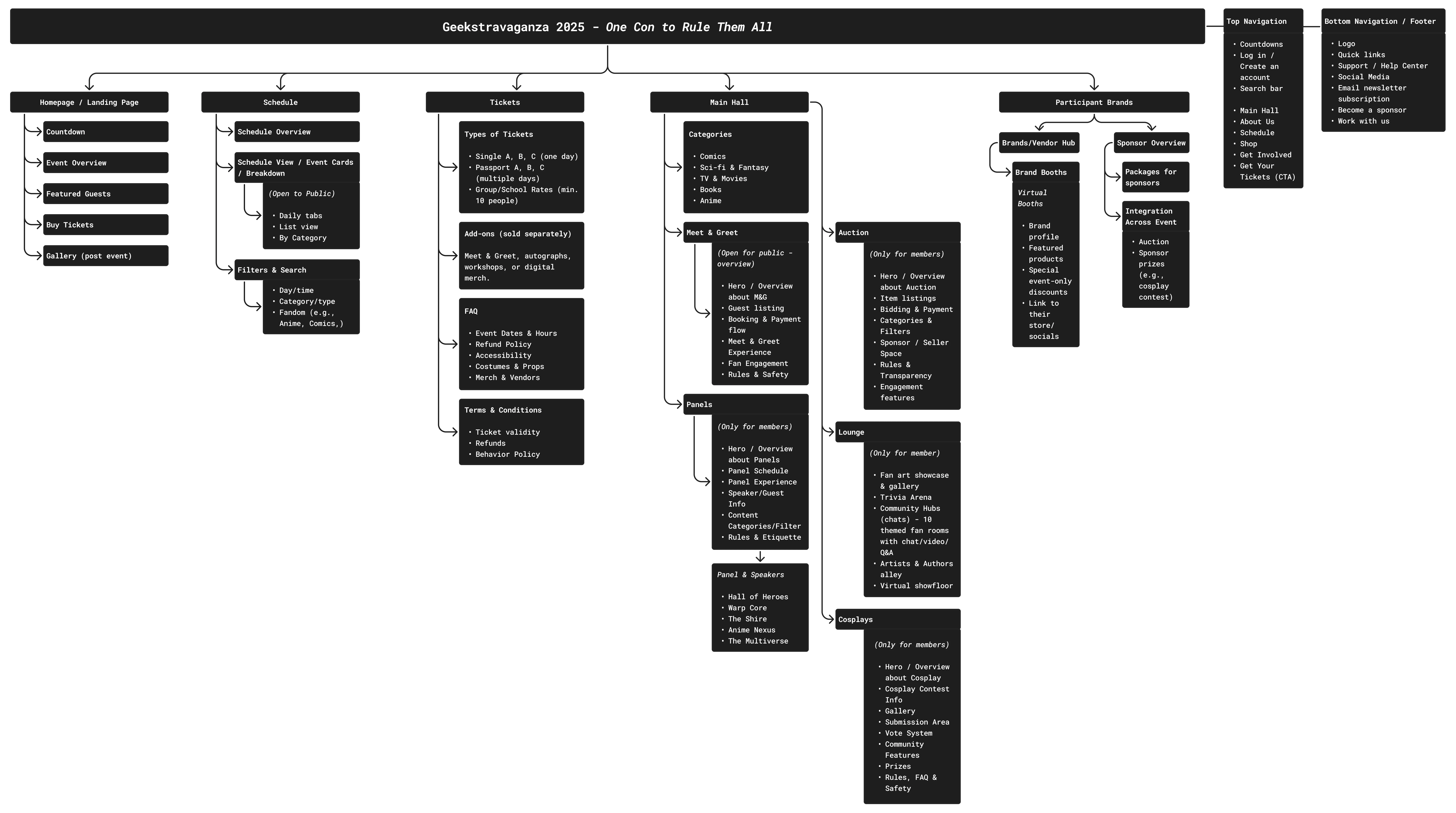
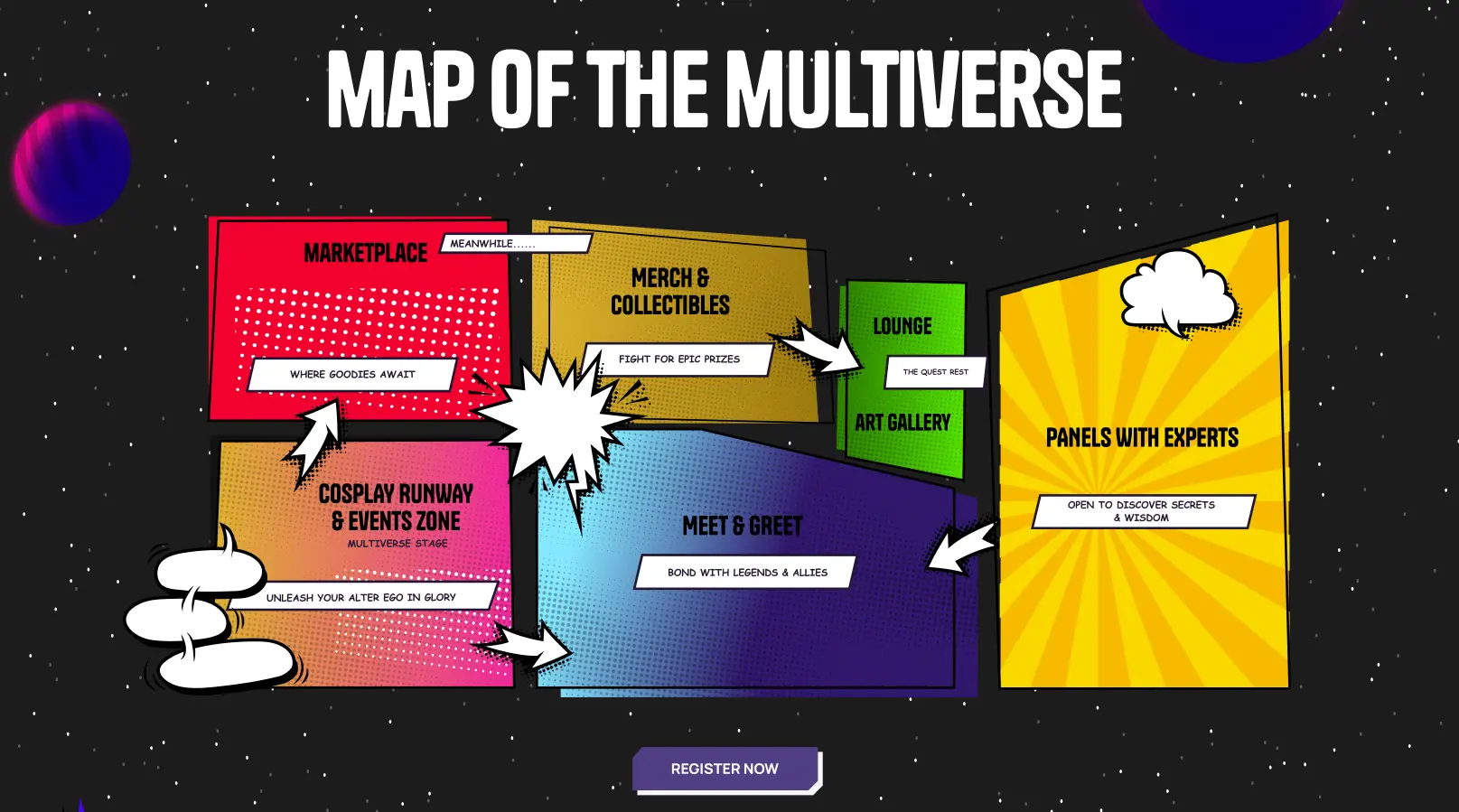
The platform is structured as a multiverse, where each section functions as its own environment while remaining part of a unified system.
Instead of navigating a traditional interface, users move between spaces such as Hall, Panels, Marketplace, and Cosplay, creating a sense of exploration rather than navigation.
Design Strategy
✦
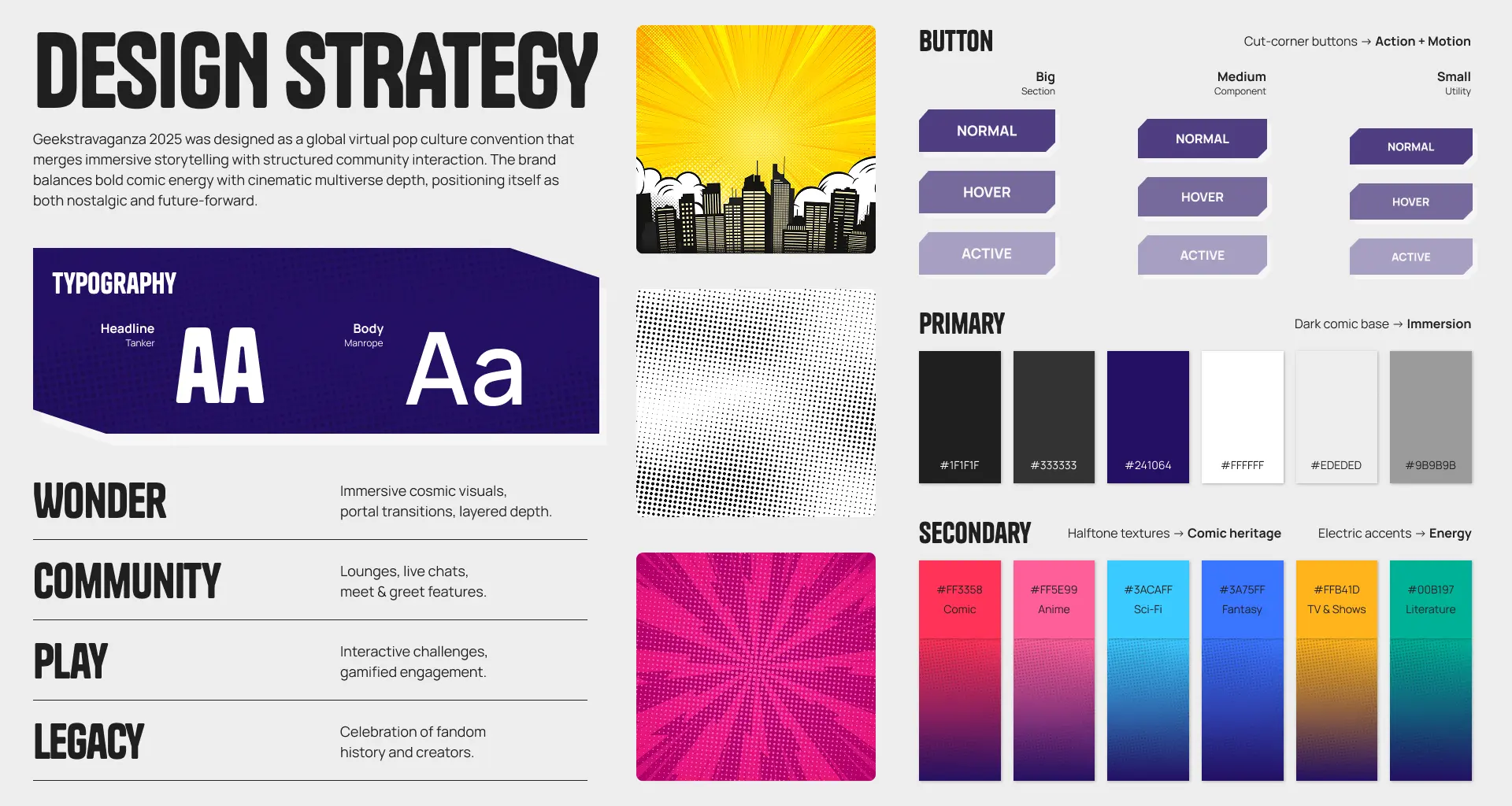
Each section has a distinct identity, using color and layout to help users orient quickly
✦
Visual depth adds immersion without competing with content
✦
Navigation relies on spatial understanding instead of heavy labeling
✦
A central hub connects all sections and anchors the experience
✦
Visual language follows the “Retro Reloaded” theme, using halftone textures and comic-inspired elements to create familiarity while maintaining readability
Design System
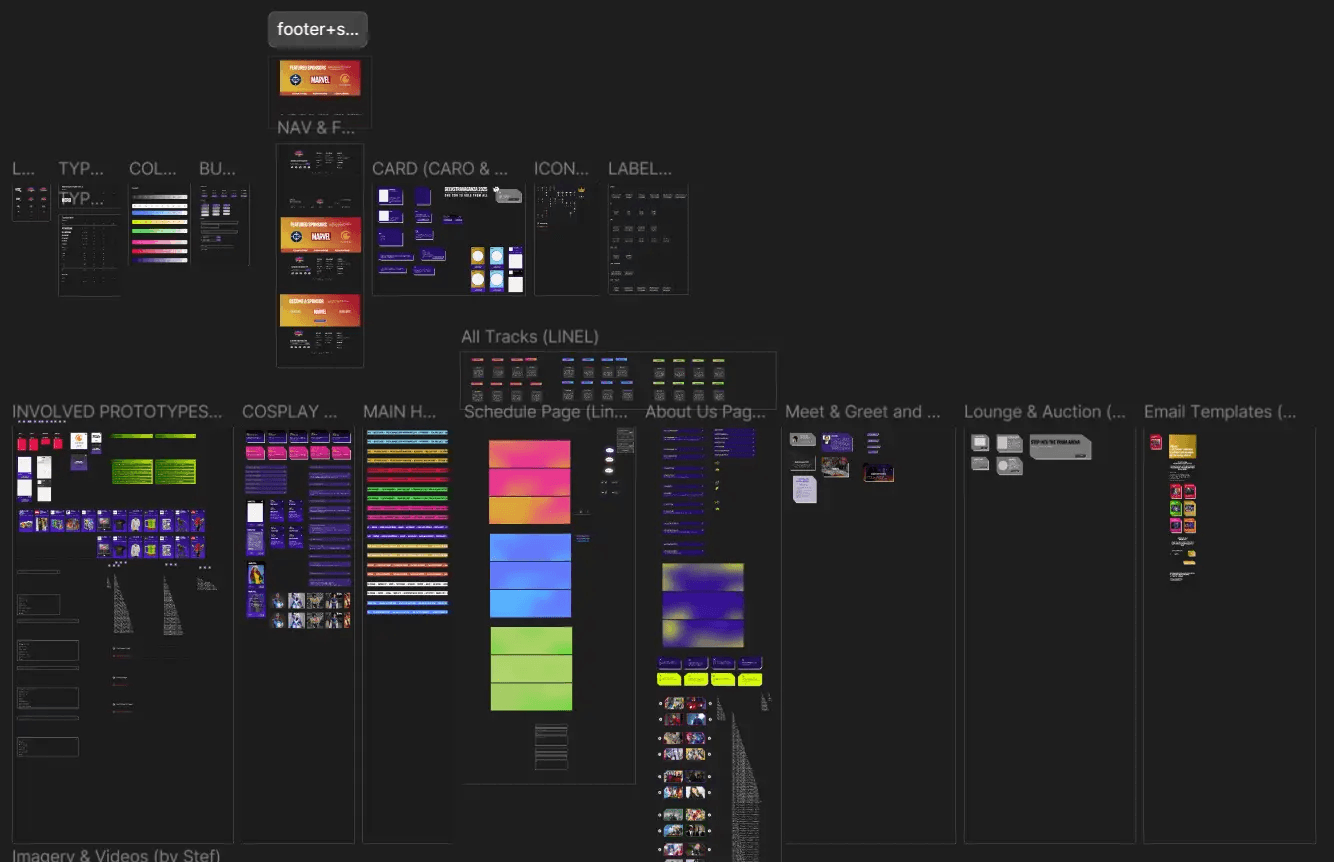
The design system ensures consistency across multiple environments while allowing each section to maintain its own identity.
✦
A color system defines each section while maintaining overall cohesion
✦
Typography balances expressive headers with readable content
✦
Reusable components ensure consistency across all flows
✦
Layout and spacing create a scalable structure across different sections
The Challenge
The Challenge
The Challenge
This project had two parallel challenges within a limited timeline:
Product challenge
Design a virtual convention that feels immersive and scalable, not like a static event website
Leadership challenge
Guide a cross-functional team through shifting scope, evolving priorities, and a fixed academic deadline
Not everything went as planned. Scope shifted and some features were reduced or removed.
The result was a more focused product that balanced creativity with usability.
This project had two parallel challenges within a limited timeline:
Product challenge
Design a virtual convention that feels immersive and scalable, not like a static event website
Leadership challenge
Guide a cross-functional team through shifting scope, evolving priorities, and a fixed academic deadline
Not everything went as planned. Scope shifted and some features were reduced or removed.
The result was a more focused product that balanced creativity with usability.
This project had two parallel challenges within a limited timeline:
Product challenge
Design a virtual convention that feels immersive and scalable, not like a static event website
Leadership challenge
Guide a cross-functional team through shifting scope, evolving priorities, and a fixed academic deadline
Not everything went as planned. Scope shifted and some features were reduced or removed.
The result was a more focused product that balanced creativity with usability.
How I handled the process
How I handled the process
✦
When scope shifted — I made early cuts and focused on core flows. A focused product is stronger than an inconsistent one
When scope shifted — I made early cuts and focused on core flows. A focused product is stronger than an inconsistent one
✦
When feedback slowed — I introduced structure through documented decisions and internal buffers. This reduced pressure and improved alignment
When feedback slowed — I introduced structure through documented decisions and internal buffers. This reduced pressure and improved alignment
✦
When escalation was needed — I involved the professor when necessary to unblock decisions and keep the project moving forward
When escalation was needed — I involved the professor when necessary to unblock decisions and keep the project moving forward
✦
What I’d do from the start — Establish lightweight check-ins to surface blockers early and maintain consistent progress
What I’d do from the start — Establish lightweight check-ins to surface blockers early and maintain consistent progress
Concept & Structure
The platform is structured as a multiverse, where each section functions as its own environment while remaining part of a unified system.
Instead of navigating a traditional interface, users move between spaces such as Hall, Panels, Marketplace, and Cosplay, creating a sense of exploration rather than navigation.
Design Strategy
✦
Each section has a distinct identity, using color and layout to help users orient quickly
✦
Visual depth adds immersion without competing with content
✦
Navigation relies on spatial understanding instead of heavy labeling
✦
A central hub connects all sections and anchors the experience
✦
Visual language follows the “Retro Reloaded” theme, using halftone textures and comic-inspired elements to create familiarity while maintaining readability
Design System
The design system ensures consistency across multiple environments while allowing each section to maintain its own identity.
✦
A color system defines each section while maintaining overall cohesion
✦
Typography balances expressive headers with readable content
✦
Reusable components ensure consistency across all flows
✦
Layout and spacing create a scalable structure across different sections
Design System
The design system ensures consistency across multiple environments while allowing each section to maintain its own identity.
✦
A color system defines each section while maintaining overall cohesion
✦
Typography balances expressive headers with readable content
✦
Reusable components ensure consistency across all flows
✦
Layout and spacing create a scalable structure across different sections
✦
Core Flows
Core Flows
Core Flows
✦
Core Flows That Shaped the Product
Core Flows That Shaped the Product
Core Flows That Shaped the Product
This platform was designed around a set of high-impact user journeys, each representing a different type of participant in the ecosystem.
Together, these flows ensured the experience was functional, scalable, and meaningful across multiple entry points.
This platform was designed around a set of high-impact user journeys, each representing a different type of participant in the ecosystem.
Together, these flows ensured the experience was functional, scalable, and meaningful across multiple entry points.
A convention serves radically different people with radically different needs: fans, cosplayers, vendors, volunteers, sponsors. We mapped 11 user flows to ensure the platform worked at every entry point. These are the five I led most closely.
Flow 1
Flow 1
Flow 1
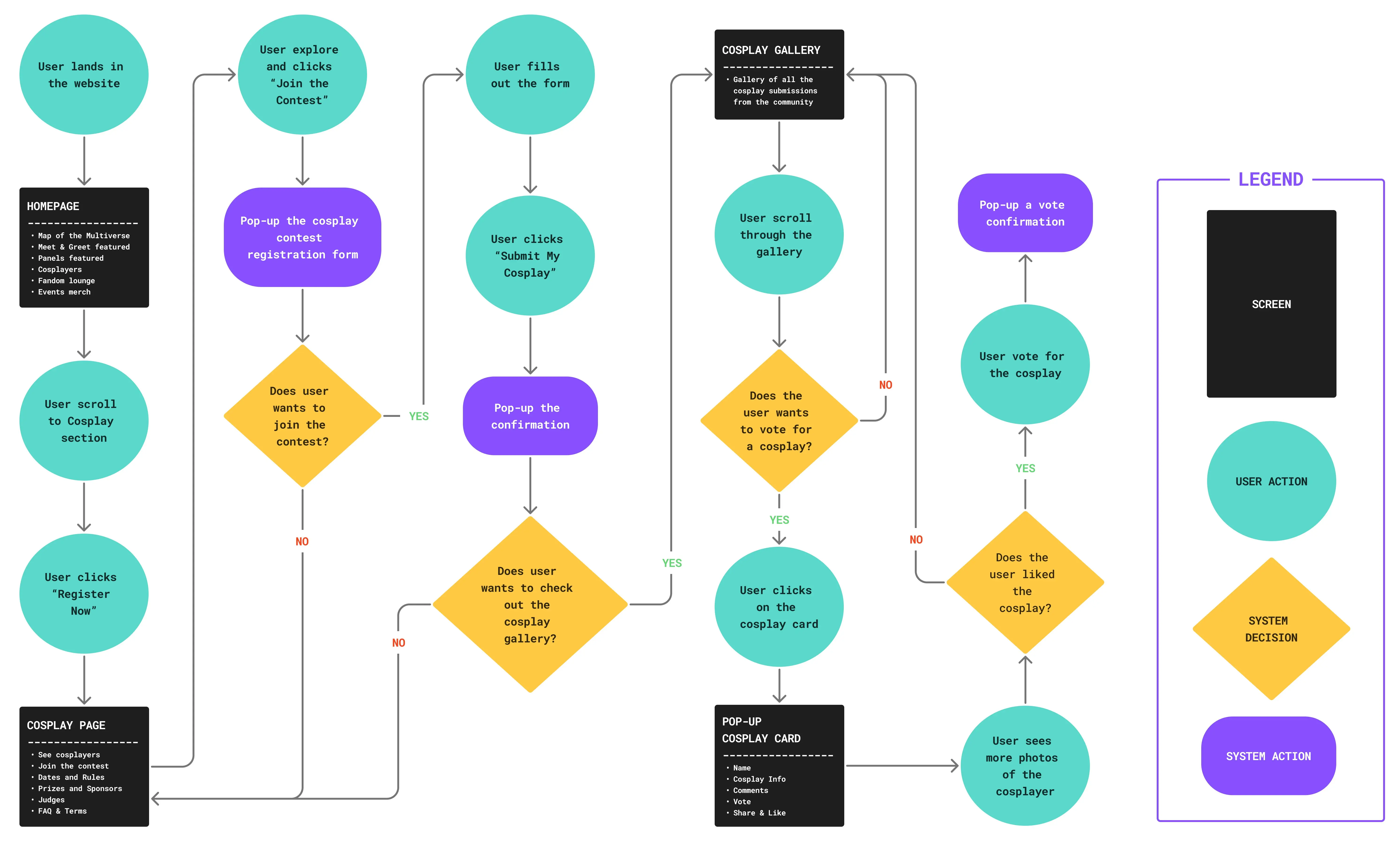
Cosplay Submission
& Community Voting
Cosplay Submission
& Community Voting
Cosplay Submission
& Community Voting
Users submit their work and participate in community voting.
Users submit their work and participate in community voting.
Users submit their work and participate in community voting.
✦
Reduced friction in submission by simplifying inputs and steps
Reduced friction in submission by simplifying inputs and steps
✦
Increased visibility through card-based layouts and browsing
Increased visibility through card-based layouts and browsing
✦
Made voting fast and intuitive to encourage participation
Made voting fast and intuitive to encourage participation
User Flow
(Click to Expand)
Flow 2
Flow 2
Flow 2
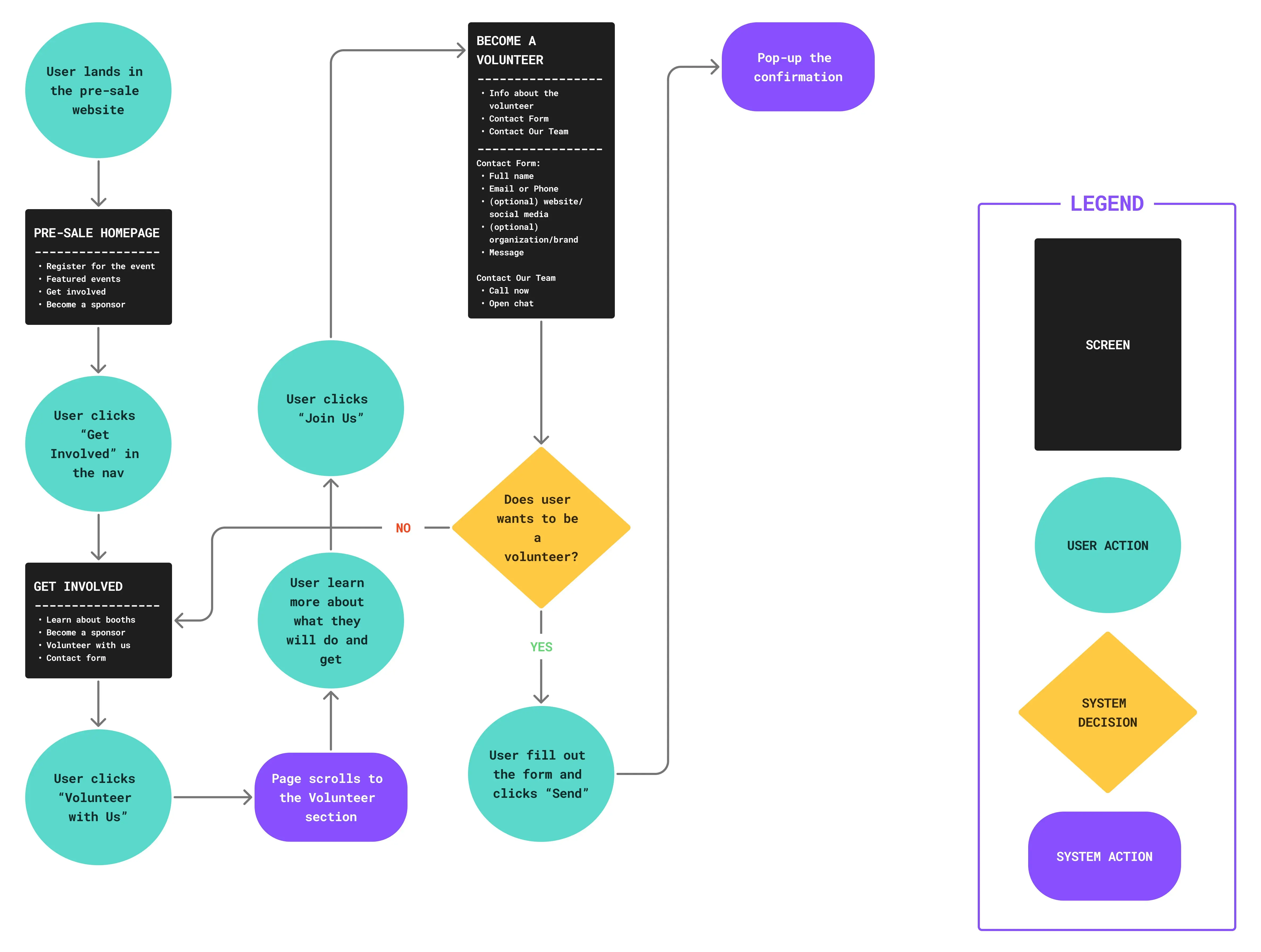
Volunteer Application
Volunteer Application
Volunteer Application
Users explore roles, understand expectations, and apply.
Users explore roles, understand expectations, and apply.
Users explore roles, understand expectations, and apply.
✦
Set expectations early with clear role breakdowns and time commitment
Set expectations early with clear role breakdowns and time commitment
✦
Simplified application to reduce drop-off while capturing essentials
Simplified application to reduce drop-off while capturing essentials
✦
Designed confirmation to feel intentional and appreciative
Designed confirmation to feel intentional and appreciative
User Flow
(Click to Expand)
Flow 3
Flow 3
Flow 3
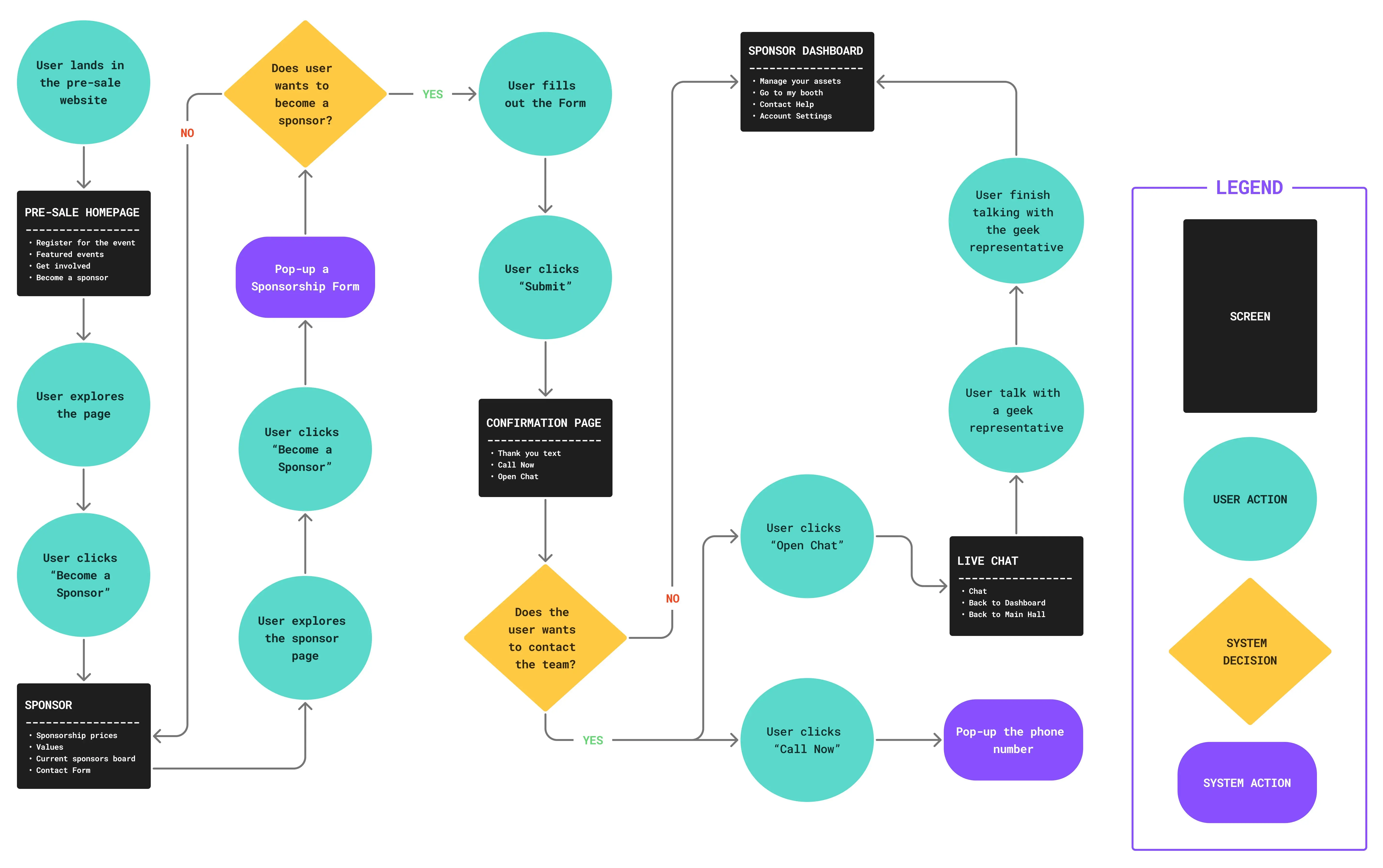
Sponsor Application
Sponsor Application
Sponsor Application
Brands evaluate opportunities and apply for sponsorship tiers.
Brands evaluate opportunities and apply for sponsorship tiers.
Brands evaluate opportunities and apply for sponsorship tiers.
✦
Structured information to support high-stakes decision making
Structured information to support high-stakes decision making
✦
Highlighted value through hierarchy and clear benefits
Highlighted value through hierarchy and clear benefits
✦
Reduced uncertainty with transparent next steps
Reduced uncertainty with transparent next steps
User Flow
(Click to Expand)
Flow 4
Flow 4
Flow 4
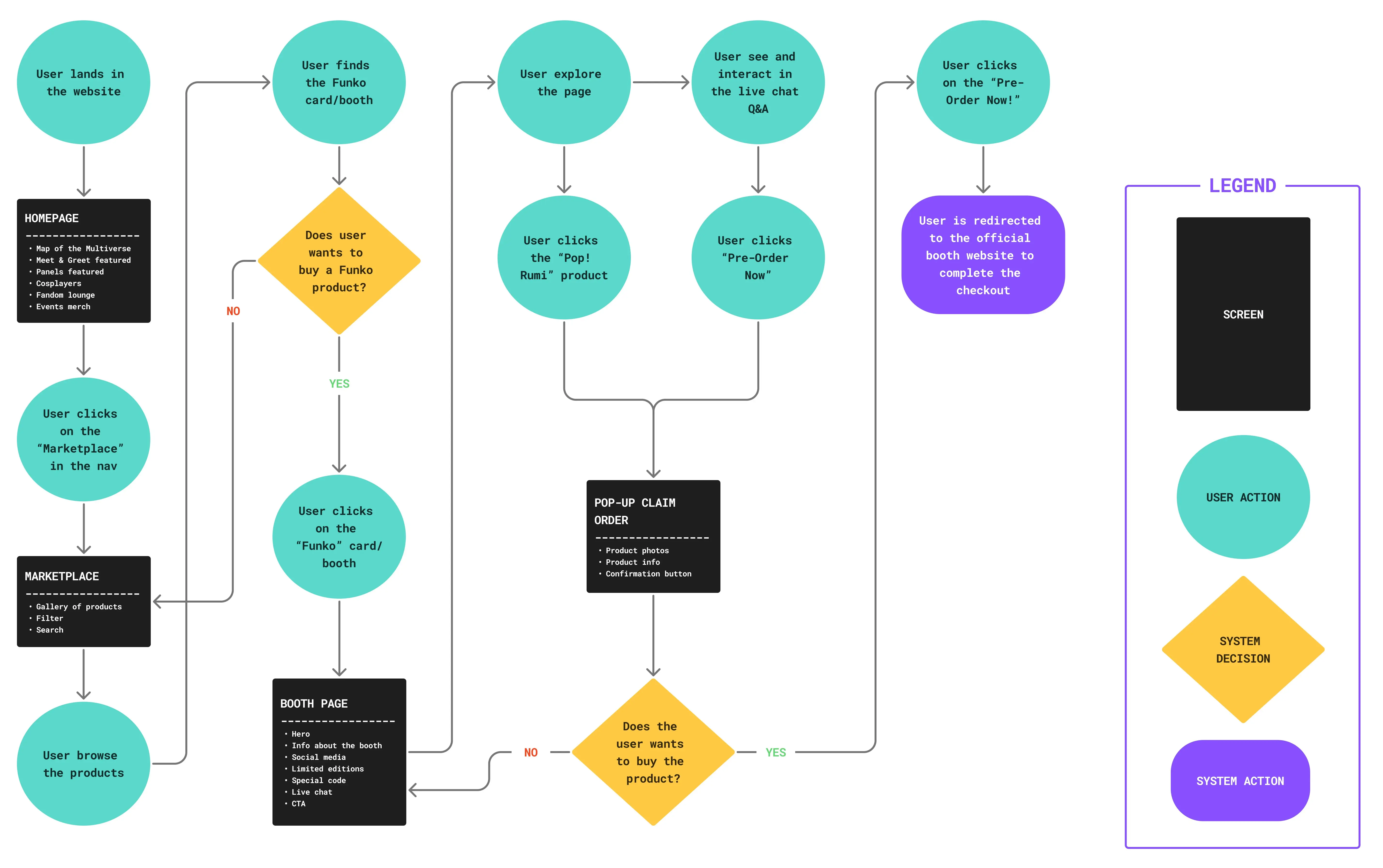
Marketplace Discovery
& Purchase
Marketplace Discovery
& Purchase
Marketplace Discovery
& Purchase
Users browse, discover, and purchase items.
Users browse, discover, and purchase items.
Users browse, discover, and purchase items.
✦
Designed for exploration first, with optional direct search
Designed for exploration first, with optional direct search
✦
Emphasized product context to go beyond transactional browsing
Emphasized product context to go beyond transactional browsing
✦
Created a clear path from discovery to checkout
Created a clear path from discovery to checkout
User Flow
(Click to Expand)
Additional Flows
Additional Flows
Additional Flows
Included registration, schedule navigation, livestream access, chat, and panel participation.
Each followed the same principles: reduce friction, align with user intent, and maintain consistency across the platform.
Included registration, schedule navigation, livestream access, chat, and panel participation.
Each followed the same principles: reduce friction, align with user intent, and maintain consistency across the platform.
Exhibitor Booth Registration · Livestream Access · Schedule Navigation · Event Participation + Chat · Panels livestream…They all follow the same logic: match the user's intent, remove friction, stay visually consistent with their universe.
From Problem to Outcome
From Problem to Outcome
From Problem to Outcome
01
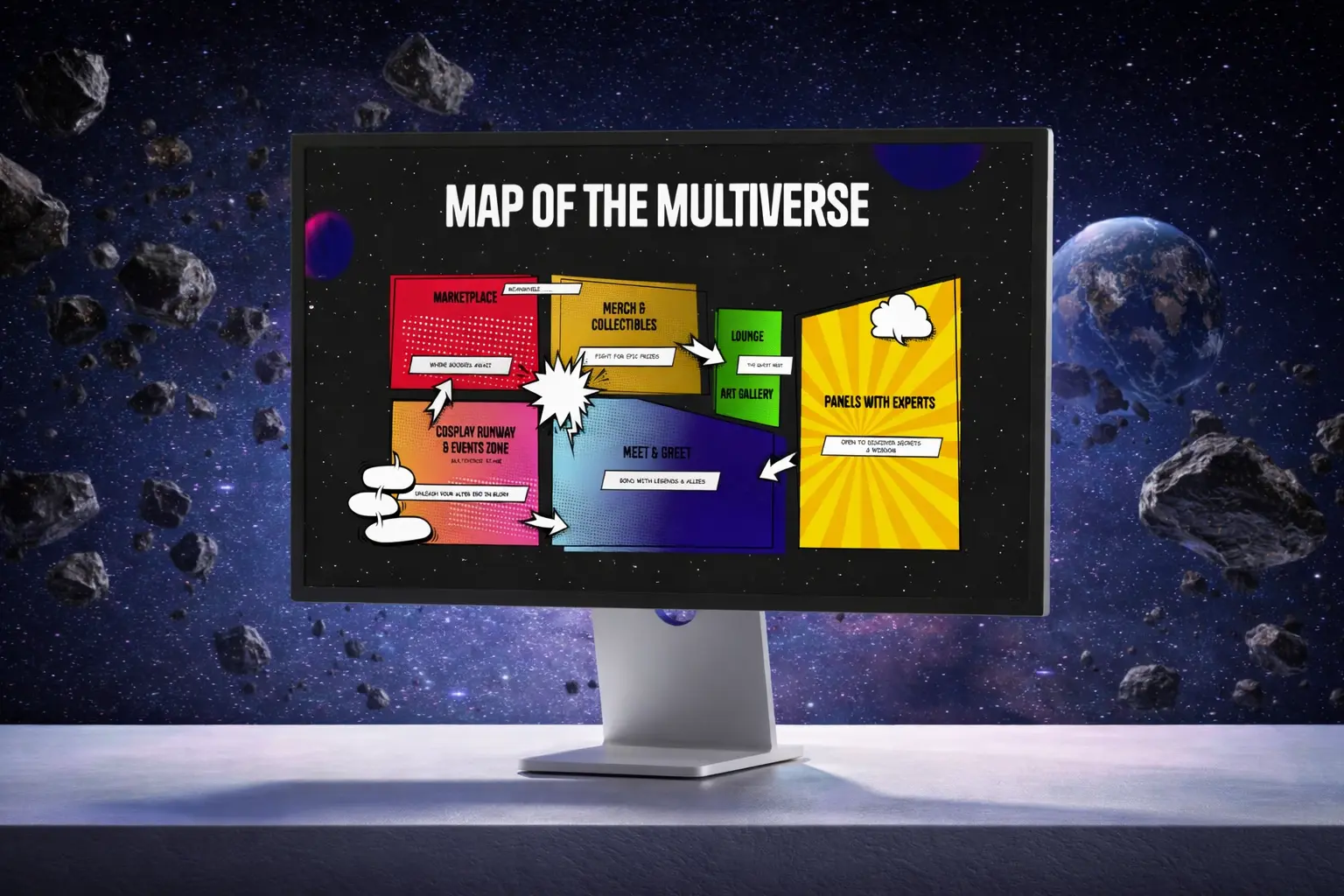
Designing for a “place”, not a website
Designing for a “place”, not a website
Designing for a “place”, not a website
Problem
Problem
Problem
Virtual events felt static and transactional, lacking immersion
Virtual events felt static and transactional, lacking immersion
Virtual events felt static and transactional, lacking immersion
Decision
Decision
Decision
Introduced a hub-based navigation and multiverse structure
Introduced a hub-based navigation and multiverse structure
Introduced a hub-based navigation and multiverse structure
outcomes
outcomes
outcomes
More spatial, exploratory experience with clearer mental model
More spatial, exploratory experience with clearer mental model
More spatial, exploratory experience with clearer mental model
02
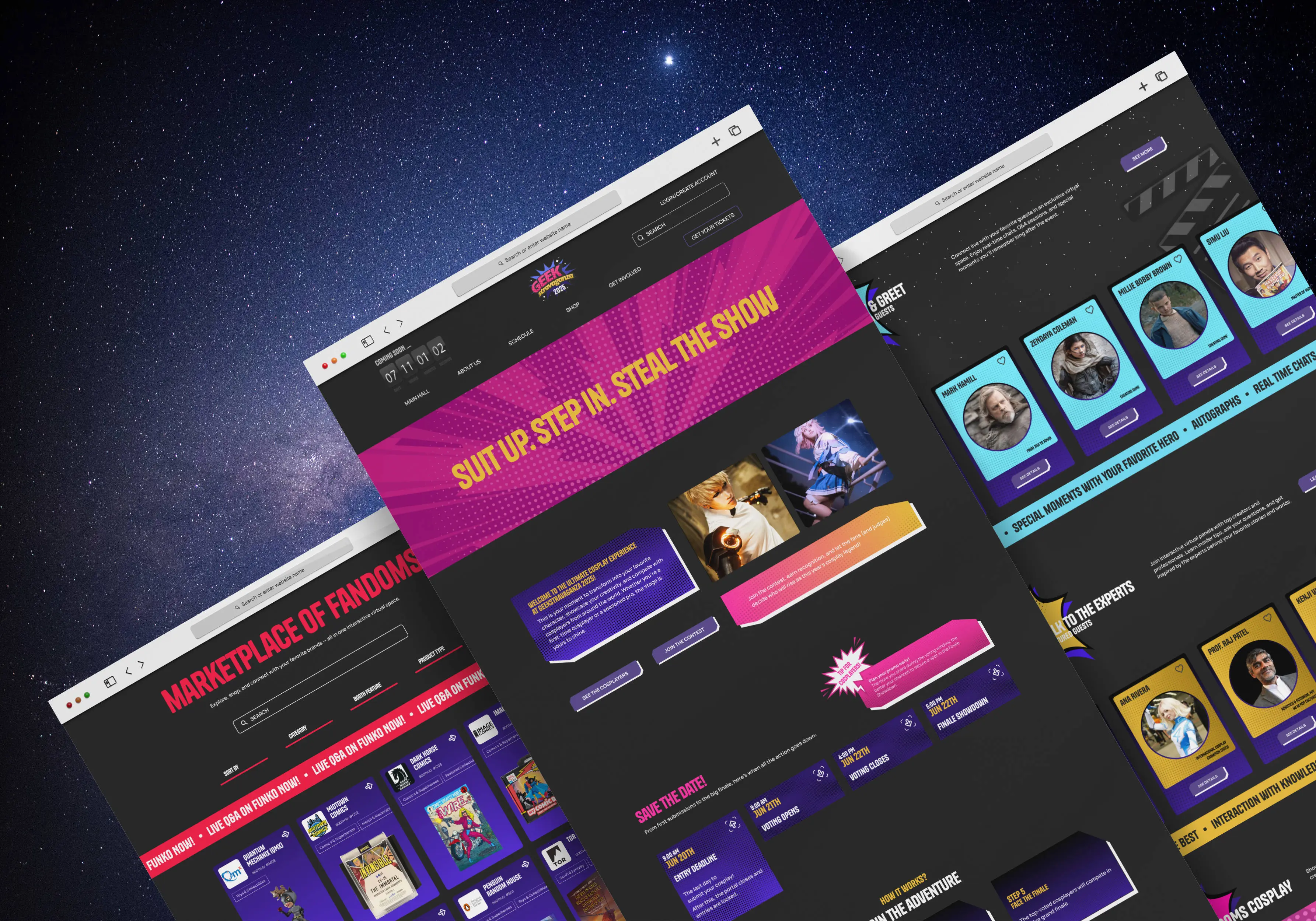
Differentiating content without fragmentation
Differentiating content without fragmentation
Differentiating content without fragmentation
Problem
Problem
Problem
Multiple tracks felt disconnected and confusing to navigate
Multiple tracks felt disconnected and confusing to navigate
Multiple tracks felt disconnected and confusing to navigate
Decision
Decision
Decision
Used a shared system with color-coded tracks and consistent patterns
Used a shared system with color-coded tracks and consistent patterns
Used a shared system with color-coded tracks and consistent patterns
outcomes
outcomes
outcomes
Clear differentiation while maintaining a cohesive experience
Clear differentiation while maintaining a cohesive experience
Clear differentiation while maintaining a cohesive experience
03
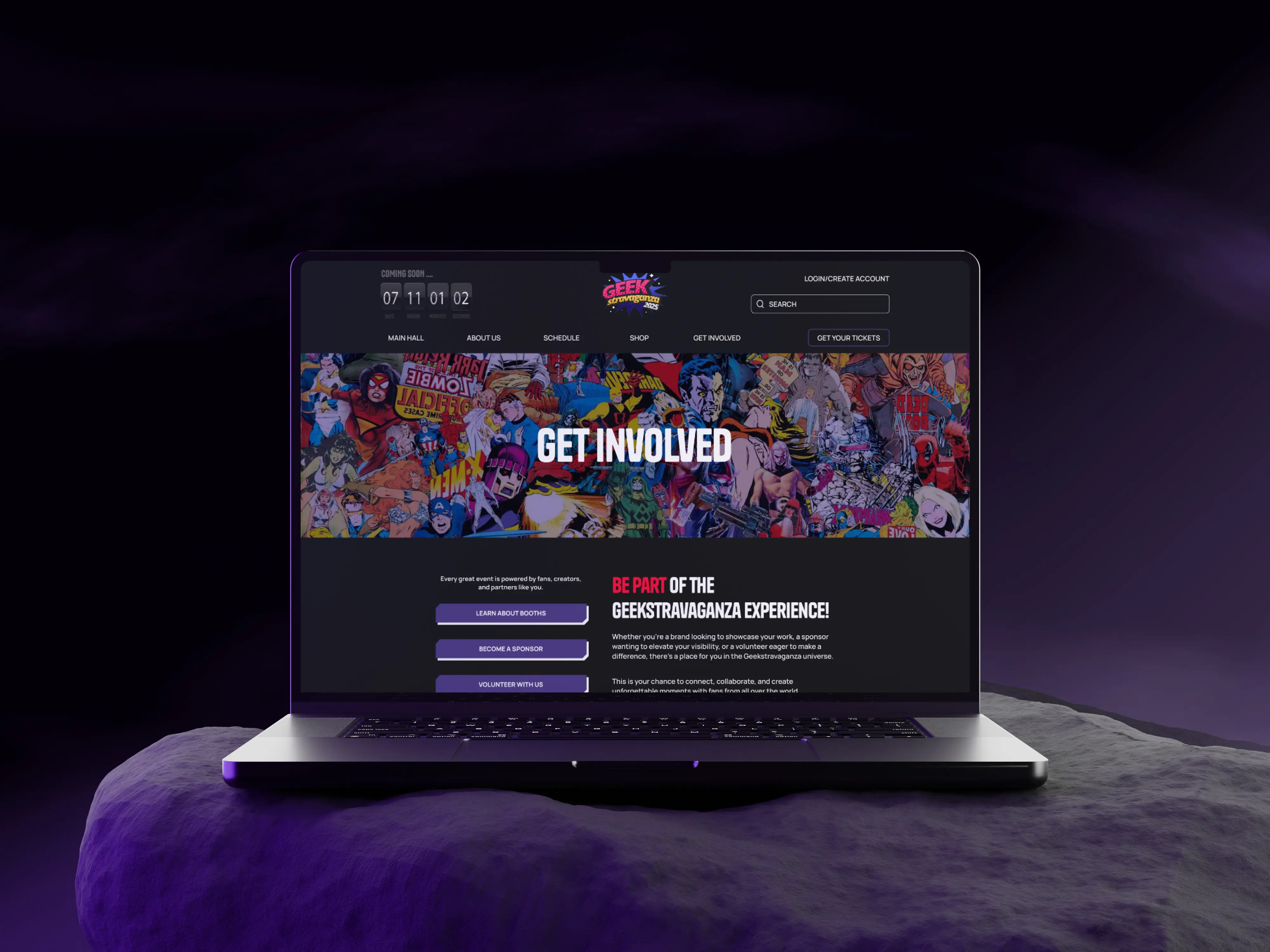
Making “Retro Reloaded” feel authentic
Making “Retro Reloaded” feel authentic
Making “Retro Reloaded” feel authentic
Problem
Problem
Problem
Theme risked feeling decorative rather than meaningful
Theme risked feeling decorative rather than meaningful
Theme risked feeling decorative rather than meaningful
Decision
Decision
Decision
Grounded visuals in halftone textures and comic-inspired elements
Grounded visuals in halftone textures and comic-inspired elements
Grounded visuals in halftone textures and comic-inspired elements
outcomes
outcomes
outcomes
Stronger identity without compromising usability
Stronger identity without compromising usability
Stronger identity without compromising usability
Reflection
What This Project
Built in Me
What I learned
✦
Clear direction is more valuable than more ideas
Clear direction is more valuable than more ideas
✦
Alignment early prevents rework later
Alignment early prevents rework later
✦
Strong decisions matter more than perfect coverage
Strong decisions matter more than perfect coverage
What I would do differently
What I would do differently
✦
Introduce structure earlier with regular check-ins
Introduce structure earlier with regular check-ins
✦
Define flows sooner to reduce mid-process confusion
Define flows sooner to reduce mid-process confusion
✦
Validate earlier, even with lightweight testing
Validate earlier, even with lightweight testing
Key takeaway
Key takeaway
Clarity is a leadership responsibility.
Good design is not just what you create, but how you guide decisions.
Clarity is a leadership responsibility.
Good design is not just what you create, but how you guide decisions.
What's next
What's next
✦
Deepen interaction design within prototypes
Deepen interaction design within prototypes
✦
Integrate testing earlier in the process
Integrate testing earlier in the process
✦
Continue building systems that scale across experiences
Continue building systems that scale across experiences
Enter Geekstravaganza
Enter Geekstravaganza
Enter Geekstravaganza
Geekstravaganza was designed as a fully virtual convention experience.
Step into the platform and explore how users navigate events, tracks, and live interactions.
Geekstravaganza was designed as a fully virtual convention experience.
Step into the platform and explore how users navigate events, tracks, and live interactions.
Prototype
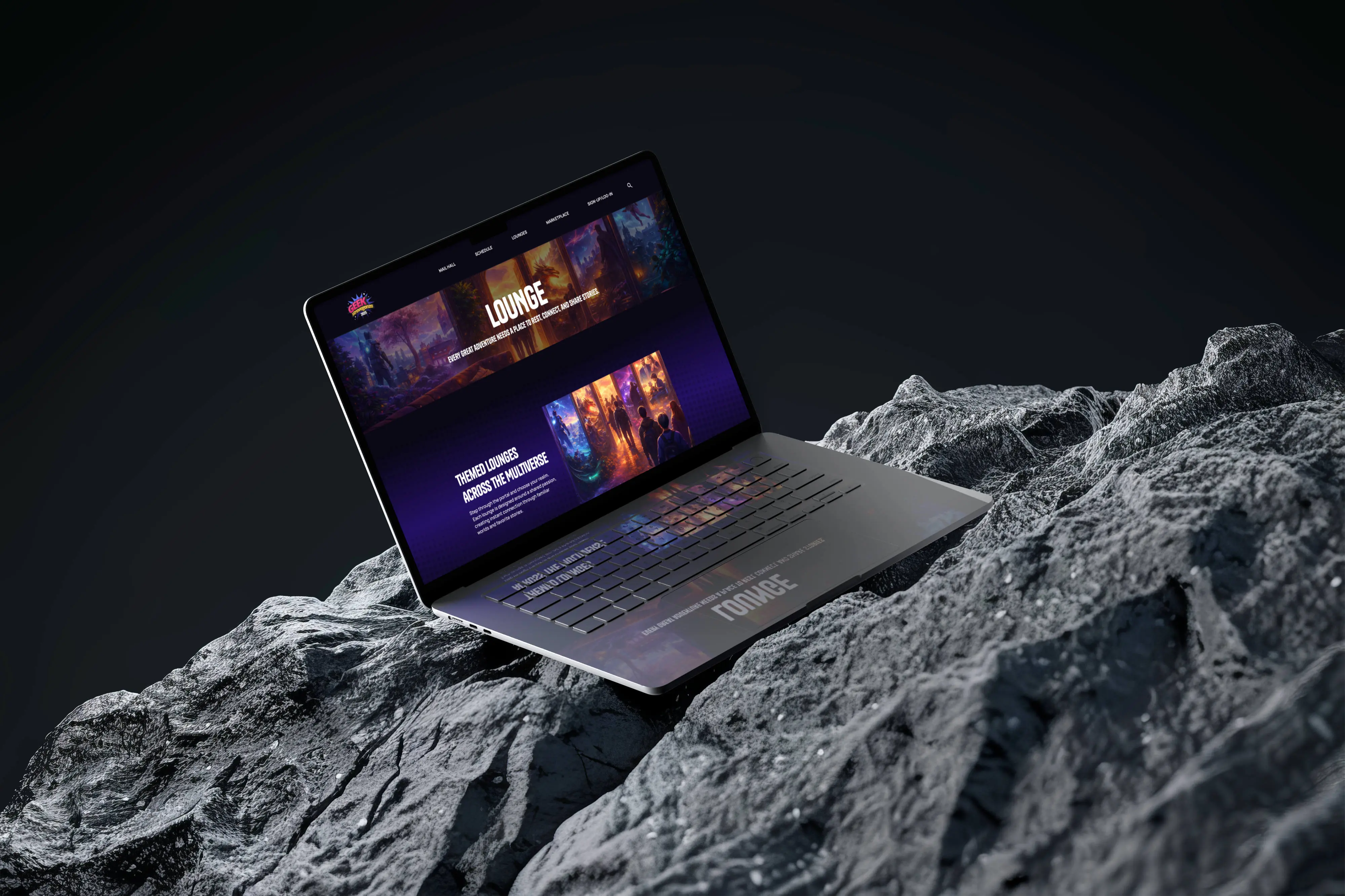
Explore the full platform structure, including the multiverse navigation, event flows, and session interactions.
View Next Project
View Next Project
Concept & Structure
The platform is structured as a multiverse, where each section functions as its own environment while remaining part of a unified system.
Instead of navigating a traditional interface, users move between spaces such as Hall, Panels, Marketplace, and Cosplay, creating a sense of exploration rather than navigation.
Design Strategy
✦
Each section has a distinct identity, using color and layout to help users orient quickly
✦
Visual depth adds immersion without competing with content
✦
Navigation relies on spatial understanding instead of heavy labeling
✦
A central hub connects all sections and anchors the experience
✦
Visual language follows the “Retro Reloaded” theme, using halftone textures and comic-inspired elements to create familiarity while maintaining readability
Design System
The design system ensures consistency across multiple environments while allowing each section to maintain its own identity.
✦
A color system defines each section while maintaining overall cohesion
✦
Typography balances expressive headers with readable content
✦
Reusable components ensure consistency across all flows
✦
Layout and spacing create a scalable structure across different sections